Introduction
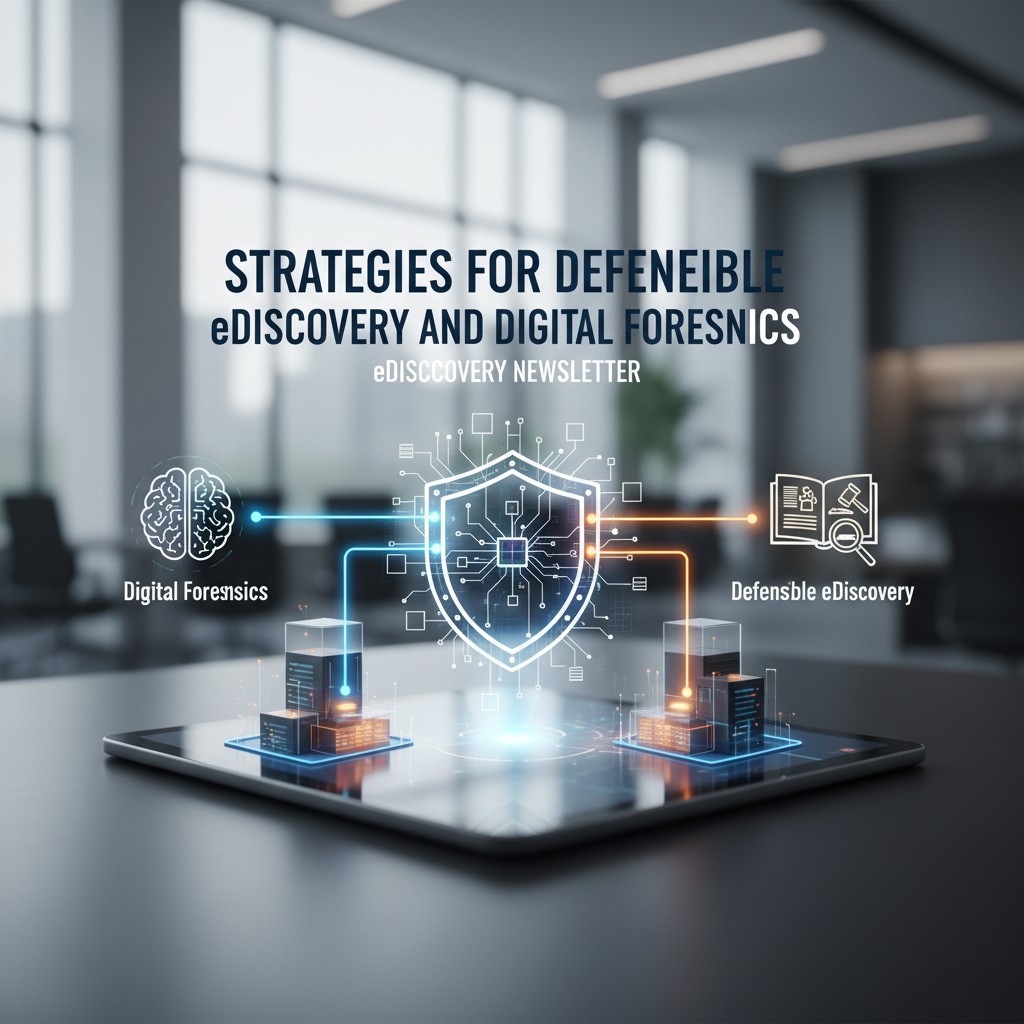
Discovery is where facts become leverage. In a world defined by hybrid work, mobile-first collaboration, and increasingly sophisticated data ecosystems, defensible eDiscovery and digital forensics are essential to litigation, investigations, and regulatory response. As an Atlanta-based eDiscovery and forensics vendor supporting regional, national, and multi-jurisdictional matters, we see firsthand how the right strategy accelerates insight, reduces cost, and protects credibility before courts and regulators.
This article outlines practical approaches attorneys, litigation support teams, and legal operations can use to manage risk and gain strategic advantage—from preservation through review—while maintaining legal defensibility across devices, cloud platforms, and structured/unstructured data.
Table of Contents
- Introduction
- The Modern eDiscovery & Forensics Landscape
- Key Opportunities and Risks
- Devices, Data Sources, and Collection Methods
- eDiscovery Workflows & Technology Solutions
- Best Practices for Defensible eDiscovery
- Industry Trends and Future Outlook
- Conclusion & Call to Action
The Modern eDiscovery & Forensics Landscape
Today’s discovery environment spans traditional endpoints and a rapidly expanding universe of cloud and SaaS platforms. Evidence often lives in multiple places simultaneously—email, chat, shared drives, cloud repositories, and mobile applications—making clear scoping, forensic soundness, and chain of custody more important than ever.
Common Data Sources
- Email and archives (Microsoft 365 Exchange Online, Google Workspace Gmail, legacy PST/NSF)
- Collaboration and chat (Microsoft Teams, Slack, Zoom, Webex, Google Chat)
- Workstations and servers (Windows, macOS, Linux, file shares, virtual machines)
- Mobile devices and apps (iOS, Android, corporate MDM-managed devices, BYOD considerations)
- Cloud storage and repositories (OneDrive, SharePoint, Google Drive, Box, Dropbox)
- Structured systems (ERP/CRM databases, HRIS, finance systems, logs, SIEM exports)
- Backups and archives (on-prem backup sets, cloud snapshots, legacy tape)
Forensic Soundness and Chain of Custody
Forensic soundness means collecting and handling data in a manner that preserves its integrity, context, and metadata, allowing it to withstand scrutiny from opposing counsel, the court, or regulators. This includes proper hashing, preservation of system and file metadata, and documented workflows that prevent alteration.
Legal Defensibility: Every transfer of evidence must be documented via a verifiable chain of custody that identifies the source, date/time, custodian, handler, tool versions, and cryptographic hash values. Courts and regulators increasingly expect transparent, reproducible methods.
- Identification & Scoping: Define custodians, systems, timeframe, and data types.
- Preservation & Legal Hold: Issue holds, suspend auto-deletion, preserve relevant sources.
- Collection: Forensic or targeted acquisition with validated tools and logging.
- Processing: De-duplication, metadata extraction, normalization, indexing.
- Early Case Assessment (ECA): Culling by keyword, date, file type, and analytics.
- Review: Technology-assisted review (TAR), email threading, near-duplicate analysis.
- Production: Format selection (native, TIFF+text, PDF), privilege and confidentiality controls.
- Presentation: Trial support, expert reporting, affidavits, and demonstratives.
Key Opportunities and Risks
Opportunities
- Early Case Assessment (ECA): Rapidly reduce data volumes, pinpoint hot documents, and refine strategy before expensive review ramps up.
- Cost Control: Proactive scoping, defensible culling, and analytics-driven review can reduce hosting and attorney-time spending.
- Faster Insights: Use analytics to surface custodians, channels, and date ranges that matter most.
- Strategic Advantage: A well-documented, repeatable playbook builds credibility and reduces motion practice risk.
Risks
- Spoliation: Failure to suspend deletion policies or preserve mobile chats can result in lost evidence and sanctions.
- Incomplete Collections: Overlooking cloud apps, shared channels, or embedded links leads to gaps and discovery disputes.
- Over-collection: Unfocused sweeps inflate processing and review volumes, driving unnecessary cost.
- Privacy & Cross-Border Issues: Data residency, GDPR/CCPA, and sector-specific rules require careful scoping and transfer planning.
- Poor Vendor or Tool Selection: Inadequate validation, outdated workflows, or misaligned hosting models undermine outcomes and budgets.
Preservation Obligations: When litigation is reasonably anticipated, promptly issue legal holds to relevant custodians and systems, suspend routine deletion, and coordinate with IT to preserve ephemeral messaging and mobile data. Document these steps.
Devices, Data Sources, and Collection Methods
Collection strategies should be tailored to the matter’s scope, proportionality, and privacy constraints. Select methods that are repeatable, minimally disruptive, and appropriately granular.
| Source | Primary Method | Forensic Considerations | Notes |
|---|---|---|---|
| Workstations/Servers | Forensic image or targeted file-level collection | Hashing, time zone, system logs, volatile data (when needed) | Imaging preserves deleted files, link files, and artifacts for investigations. |
| Mobile Devices | Logical/advanced logical; selective app data exports | Encryption, MDM policies, BYOD consent, chat attachments | Prioritize relevant apps (SMS/iMessage, WhatsApp, Teams, Slack mobile). |
| Microsoft 365 | API-based targeted export (Purview), mailbox/site exports | Preserve custodial context, version history, Teams/OneDrive links | Address cloud-native links and shared channels to avoid gaps. |
| Google Workspace | Vault exports, Drive file collections | Metadata consistency, shared drives, shortcuts | Clarify ownership vs. shared drive roles to mitigate misses. |
| Slack/Collaboration | Discovery APIs, workspace exports | Private channels, DMs, threads, edits/deletes | Map channel structure to legal hold and collection plan. |
| Structured Systems | Report extracts, database exports, audit logs | Documentation of queries, field mapping | Align fields to issues; test and validate export repeatability. |
| Backups/Archives | Targeted restore, selective extraction | Chain of custody for restored data, deduplication | Use only when necessary; backups can inflate scope quickly. |
Forensic vs. Targeted Collections
- Forensic Collections: Preserve complete media, including unallocated space and system artifacts; best for investigations, spoliation concerns, or authenticity challenges.
- Targeted Collections: Acquire specific mailboxes, folders, channels, or date ranges; ideal for proportional discovery in civil matters where authenticity is not disputed.
Common Pitfall: Treating all custodians the same. Use forensic imaging selectively (e.g., key custodians, suspected deletion), and targeted collections elsewhere to control volume and cost without sacrificing defensibility.
Remote and On-Site Acquisition
- Remote: Efficient for cloud exports and managed endpoints, especially when custodians are dispersed; ensure bandwidth planning and chain-of-custody controls.
- On-Site: Necessary for air-gapped systems, sensitive environments, or where immediate triage is needed. Atlanta-based teams can reach Southeast sites quickly while supporting national deployments.
eDiscovery Workflows & Technology Solutions
Efficient workflows combine scalable processing, analytics-driven culling, and review strategies aligned to the matter’s risk profile. The goal is to minimize volume without undermining completeness or context.
Processing, Filtering, Analytics, and Review
- Processing: Handle deduplication (global/custodial), metadata normalization, text extraction, and exception handling.
- Culling & ECA: Apply date ranges, custodial scoping, file-type filtering, and keyword testing; validate search efficacy.
- Advanced Analytics: Email threading, near-duplicate detection, concept clustering, communication mapping.
- Review Acceleration: Workflow rules, batching by issue, quality control sampling, and TAR/CAL to prioritize relevance.
- Production: Format selection (native, TIFF+text), privilege logging, redaction workflows, and protective orders.
| Model | Strengths | Considerations | Best For |
|---|---|---|---|
| On-Premises | Direct control, data locality, custom security | Capital expense, maintenance burden, scalability limits | Enterprises with strict data residency or bespoke security needs |
| Private Cloud | Scalable, controlled environment, strong security options | Ongoing OPEX, vendor due diligence, integration planning | Matters requiring predictable performance and security |
| Managed Hosting | Rapid deployment, elastic scale, expert administration | Per-GB/seat costs, vendor SLAs critical | Firms seeking speed-to-value and reduced administrative overhead |
Review Platforms and Analytics
Modern review platforms support TAR/CAL, threading, and visualization to surface key conversations and reduce document counts. Ensure your vendor validates processing logs, search efficacy, and TAR protocols, and provides transparent reporting for defensibility and budget tracking.
Managed Services vs. In-House Workflows
- Managed Services: Vendor-led administration, predictable SLAs, expert tuning, and surge capacity for large or fast-moving matters.
- In-House: Greater control and customization; requires staffing, infrastructure, and governance maturity.
- Hybrid: Keep strategic oversight internal while leveraging vendor scale and tool specialization.
| Category | Examples | Primary Use | Selection Tips |
|---|---|---|---|
| Endpoint Forensics | EnCase, FTK, Magnet AXIOM | Imaging, artifact analysis, investigations | Validate versioning, hashing, and reporting capabilities. |
| Mobile Forensics | Cellebrite, Magnet, Oxygen | Logical/advanced logical acquisitions, app data | Consider encryption support, app coverage, and legality in jurisdiction. |
| Cloud/SaaS Collection | Microsoft Purview, Google Vault, Slack Discovery APIs | Targeted exports with metadata preservation | Confirm coverage for threads, edits, deletes, and links. |
| Processing/Review | Leading review platforms with TAR/CAL | Processing, analytics, managed review | Evaluate analytics, audit trails, and hosting model flexibility. |
Best Practices for Defensible eDiscovery
Preservation and Legal Holds
- Issue holds that clearly define scope, custodians, and covered data types (including mobile and collaboration channels).
- Coordinate with IT to suspend auto-deletion and retention policies where appropriate.
- Track acknowledgments, reminders, and release dates to demonstrate diligence.
Documentation and Chain of Custody
- Maintain collection logs: tool names/versions, operators, locations, hashes, and timestamps.
- Record decisions: scope, exclusions, keyword testing, and exceptions to justify proportionality.
- Ensure audit trails across processing, review, and production.
Proportionality Under the Rules
- Right-size collection using iterative scoping, sampling, and validated culling.
- Balance the importance of issues with burden and cost; negotiate search protocols early.
- Use TAR and analytics to reduce volume while maintaining recall of relevant material.
Collaboration Between Counsel, IT, and Vendors
- Convene early case conferences with legal, IT, and your vendor to map systems, data owners, and constraints.
- Document responsibilities for each phase and establish escalation paths for exceptions.
- Align communication with custodians, HR, and compliance to handle privacy and employment considerations.
Best Practice Call-Out: Build a repeatable playbook that includes custodian interview templates, cloud system inventories, standard legal hold language, and validated keyword/TAR workflows. Consistency is a cornerstone of defensibility.
Industry Trends and Future Outlook
Growth of Mobile and Cloud-First Evidence
Business communications increasingly occur in mobile apps and cloud collaboration platforms. Expect more emphasis on capturing chat threads, emojis, reactions, edits, deletes, and linked cloud files to reconstruct conversations faithfully.
Increasing Judicial Scrutiny of Discovery Practices
Courts continue to scrutinize preservation lapses, overly broad or under-inclusive searches, and inadequate TAR documentation. Clear, auditable processes and transparent meet-and-confer engagements mitigate motion practice and sanctions risk.
Cost Transparency and Alternative Pricing
Clients demand predictability. Look for vendors that offer transparent per-GB, per-custodian, or subscription pricing with proactive dashboards, ECA-first workflows, and budget checkpoints. The ability to explain cost drivers—collection method, hosting model, analytics use—is essential for approvals.
Regional Expertise and Vendor Specialization
Local presence matters. An Atlanta-based partner offers rapid on-site response across the Southeast while coordinating nationally on multi-jurisdictional matters. Familiarity with regional court expectations, local privacy requirements, and industry verticals (healthcare, manufacturing, financial services) reduces friction and accelerates outcomes.
Conclusion & Call to Action
Defensible discovery is not an accident; it is the product of clear scope, disciplined preservation, validated tools, and transparent reporting. With data spread across devices, applications, and jurisdictions, your choice of strategy and partner can be the difference between early insight and late-stage surprises.
Whether your matter is a narrowly focused internal investigation or a multi-district litigation, a scalable, analytics-forward approach grounded in forensic soundness will control cost and strengthen your position with the court.
Ready to strengthen your eDiscovery and digital forensics strategy? Contact Relevant Data Technologies today to discuss defensible, efficient, and scalable discovery solutions.